
Emergency leak detection in Cheshire, CT matters most when water is moving where it should not. If a ceiling is dripping, a wall feels warm and damp, or you hear water running with every fixture off, shut the main valve and call our 24/7 line. The sooner the source is found, the less drywall, flooring and insulation need to come out.
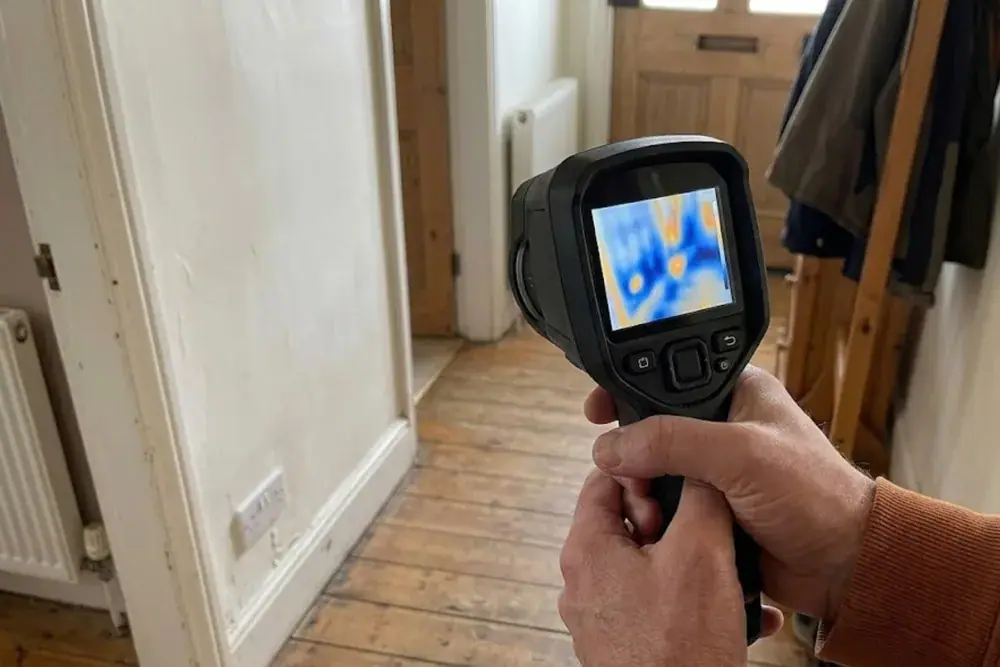
Leak detection is the work of locating a leak without guessing. A plumber uses a thermal camera to see temperature differences, acoustic tools to hear pressurized water escaping, and pressure tests to confirm which section of pipe is losing water.
Active leak: stop the water first
Find the main water shutoff, usually where the line enters the basement, and turn it fully off. Open a faucet at the lowest level to drain the pipes. Move belongings away from the wet area, and stay clear of ceilings that sag or bulge, since a swollen ceiling can fall without warning.
If water is near outlets or the electrical panel, turn off power only from a dry location, or call us and wait. Take photographs for your insurer before you clean up. Then call (203) 720-6269 and say where the damage shows, since the stain is often not directly under the leak.
The leaks homeowners call about most
Hidden leaks show up in a handful of ways, and each points to a different search method.
A high water bill with no change in use
Check the meter with every fixture off. If the dial still moves, water is escaping on the house side. The source could be a toilet, an irrigation line or a buried supply pipe.
A stained ceiling or damp wall
Water travels along framing before it shows. We trace the stain upward with a moisture meter and thermal camera to the actual joint.
Warm spots or a hot floor
Hot water supply lines under a slab or in a floor can leak. Warm patches on a floor are a classic sign, and the line may need rerouting.
Sound of running water at night
A pressurized leak hisses. Acoustic listening on the pipe narrows it to a few feet.
Wet crawlspace or musty smell
A drip under a house or an addition can run for months before staining anything above.
Slab, crawlspace and buried line leaks in Cheshire
Most Cheshire homes have basements, which makes supply pipes easy to inspect. Slab-on-grade sections, additions and garages can hide lines under concrete, and slab leaks appear as warm floor spots, a wet patch on a concrete floor or the sound of water with no visible source. We locate the leak by sound and pressure, then discuss repair or rerouting.
Buried water service lines between the street and the house are the other hidden risk. A leak there can saturate soil without ever surfacing, and a high bill is often the first sign. If you plan to dig anywhere near a suspected line, call 811 first so utilities are marked. Our water service line repair page covers the fix once the source is found.
Which tool finds which leak
We choose the method that fits the symptom.
| Tool | Best for |
|---|---|
| Thermal imaging camera | Hot water leaks, wet insulation, radiant heat lines, ceiling stains |
| Acoustic listening | Pressurized leaks in supply pipes under floors or in walls |
| Pressure test | Confirming which section of a line is losing pressure |
| Moisture meter | Tracing the spread of water in drywall and wood |
| Sewer or drain camera | Drain leaks that stain ceilings below bathrooms |
Leak or high bill? Get the source found.
Call the 24/7 line and describe where the water shows.
Irrigation, sump and appliance leaks that fool people
Sprinkler lines, outdoor spigots and a leaking toilet flapper are common reasons for a rising bill. A toilet leak can run silently for weeks, and a dye tablet in the tank reveals it in minutes. Our toilet repair team handles the fix, and a failed supply valve under a sink falls under faucet repair.
Water in a basement is not always a pipe leak. Groundwater seeping through a wall or a sump pump that cannot keep up looks similar, and the fix is different. If the wetness follows rain, look at sump pump repair or basement waterproofing before opening walls.
What the code says about leak detection
The model code behind Connecticut plumbing is the 2021 IPC, adopted through the 2022 State Building Code. Finding a leak is diagnostic, while opening a wall or replacing the failed section brings the code into it. We do not guess at permit rules on the phone. The Cheshire Building Department, 84 South Main Street, is the office that decides.
Service across Cheshire and nearby towns
We run leak detection in Cheshire and in Southington, Wallingford, Meriden and Prospect. Homes on private wells in Prospect or outlying Cheshire have a different clue, because a leak there can make the well pump cycle more often. Mention that when you call.
Leak detection questions in Cheshire
Yes. (203) 720-6269 is answered 24/7. Active leaks get priority, and we advise on shutting off water while the plumber is on the way.
Turn off every fixture and watch the water meter. If the dial or the low-flow indicator moves, water is escaping. A rising bill with no change in use is the other common sign.
Usually not at first. Thermal imaging, acoustic tools and pressure tests narrow the search so any opening is small and targeted.
Cheshire has mostly basements, so slab leaks are less common than in slab-on-grade regions, though additions and garages may have lines under concrete.
Policies differ. Many cover resulting damage in sudden cases and not the repair of a worn pipe. Ask your insurer, and keep photographs and our written findings.
Leave the building and call 911 or Yankee Gas at 877-944-5325 before calling a plumber. Do not use switches or open flames.