
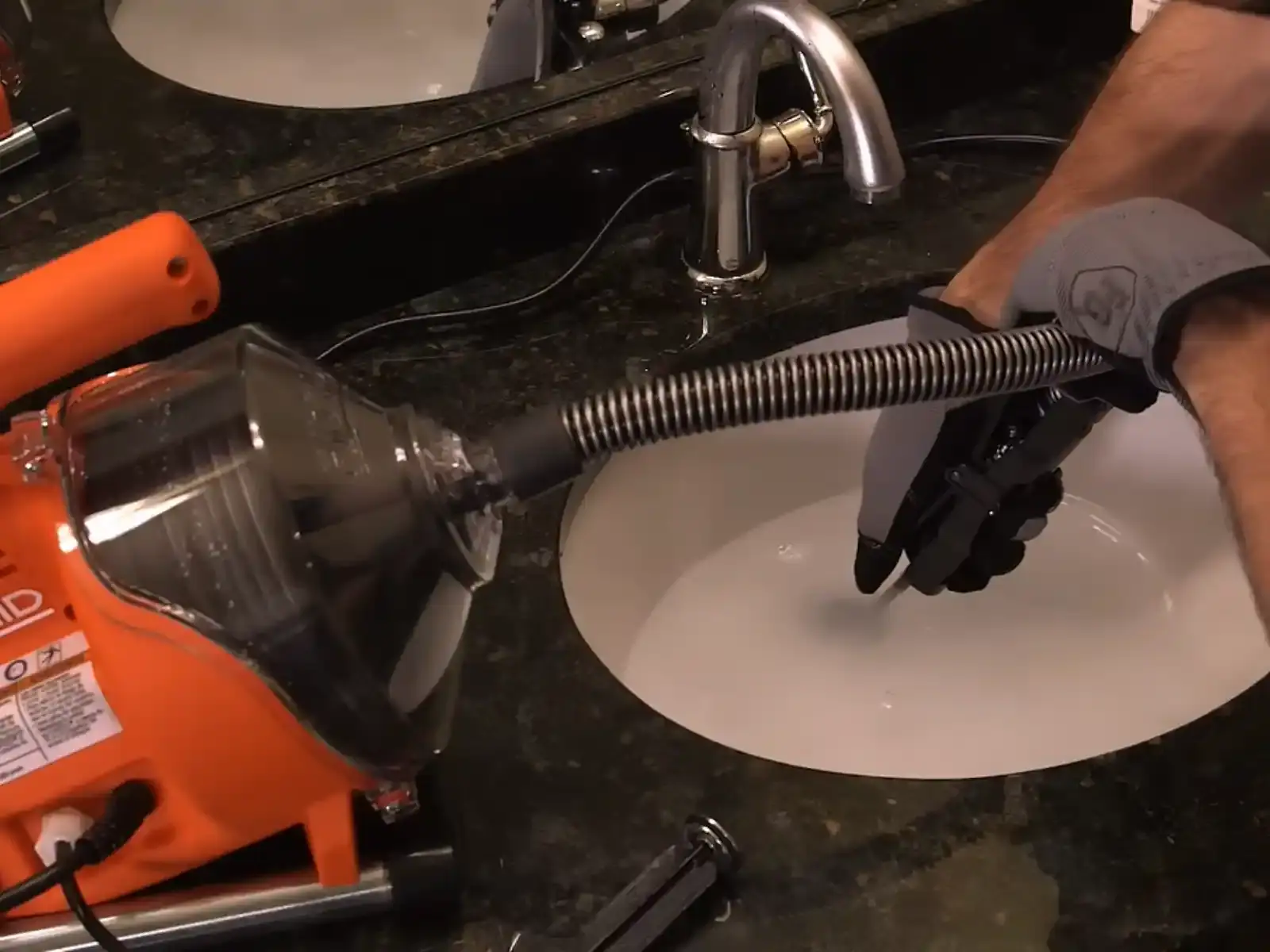
Emergency drain cleaning in Cheshire, CT starts with one rule: stop adding water. If a tub, toilet or kitchen sink is backing up, our 24/7 line is open and a plumber can explain what to do while the appointment is being set. Run nothing, flush nothing, and keep a bucket handy if a fixture is close to the rim.
Drain cleaning means removing whatever is blocking a pipe so water drains at full speed again. That can be hair and soap in a tub trap, grease and food in a kitchen line, or roots and scale in the larger pipe that carries everything to the sewer or septic tank.
When a clogged drain is an emergency
Most single-fixture clogs are an annoyance that can wait for a regular visit. A few are not. If several fixtures gurgle or back up at once, if water rises in the basement floor drain when the washer runs, or if sewage smells appear, the blockage is in the main line and waste has nowhere to go.
At that point the safest steps are simple. Stop using water in the house, keep children and pets out of any wet area, and call the 24/7 line at (203) 720-6269. Do not pour drain chemicals into a backed-up main line. They sit in standing water, they burn skin, and the plumber then has to work around them.
Signs the blockage is in the branch or the main
Where the clog sits decides what tool clears it and how fast. These patterns help sort a one-fixture problem from a whole-house one.
One fixture drains slowly
Usually a hair, soap or grease buildup close to the fixture. A hand snake or a trap cleaning often solves it in one visit.
Toilet and tub gurgle together
The branch line they share is restricted. Water moves, but air is pulled back through the traps, which is the gurgling you hear.
Basement drain bubbles or rises
The main line is blocked or very slow. Laundry and showers upstairs push water down to the lowest opening, the floor drain.
Clogs return every few weeks
Something in the pipe is catching debris again, such as roots, a belly, scale or a cracked joint. Cleaning once will not fix it for good.
Why drains in Cheshire homes clog
Cheshire has a wide spread of housing. Homes near the Cheshire Historic District and older streets off Route 10 can have original cast iron or clay drain lines that roughen with age and catch grease. Newer subdivisions off Route 68 and Route 70 usually have smooth PVC, where the common culprit is what goes down the kitchen sink and the flushable wipes that are not really flushable.
Sewer or septic matters here too. The town sewer division reports serving about 5,000 properties, so a large share of Cheshire homes run to a private septic system instead of the public sewer.
A septic home with a slow main drain should be checked for a full tank before anyone cables the line, because snaking a drain that is slow only because the tank is full does nothing useful. If you are unsure which system you have, ask the Chesprocott Health District, which serves Cheshire, Prospect and Wolcott.
How we clear a drain
We start by finding where the water stops. A plumber checks the fixture, the trap and the nearest cleanout, then chooses the tool. A hand auger or drum machine with a cutting head handles branch lines and most kitchen clogs. For larger lines, a cable with a bigger head pulls roots and grease back out instead of pushing them deeper.
After the line runs clear we run water to confirm the flow, and we tell you plainly what we found. If the cable brought back roots, scale or a piece of broken pipe, that points to a repair or a camera look rather than another cleaning. Our sewer camera inspection shows the inside of the pipe, and hydro jetting scrubs the walls when grease is the repeat offender.
What affects the price of drain cleaning
We give a clear price before work starts. These are the factors that move it, so the number is not a surprise.
| Factor | Why it matters |
|---|---|
| Which line is blocked | A fixture trap is quick. A main line cleaned from the outside cleanout takes more time and heavier equipment. |
| Access | A cleanout makes the job faster. With no cleanout, the plumber may need to pull a toilet or work from the roof vent. |
| Cause of the clog | Soap and hair clear easily. Roots or a damaged pipe may need a camera and a repair after the cleaning. |
| Time of day | After-hours and weekend calls are dispatched around the clock, and the price is stated before work begins. |
Backed up right now?
Call the 24/7 line and describe which fixtures are affected.
What you can try first, and what to leave alone
A plunger on a single sink or tub is a fair first move. Use a cup plunger on flat surfaces and a flange plunger on toilets, and keep a tight seal. If two or three strong plunges do nothing, stop. Repeated force on a stubborn clog can loosen a connection under the sink.
Leave the chemical openers on the shelf, since they sit in standing water and eat at older pipe. Wipes, paper towels and cooking grease are the top three things we pull from Cheshire lines. A strainer in the tub and a jar for used grease cost very little and prevent a good share of calls.
Code and permits for drain work
Connecticut plumbing work falls under the 2022 State Building Code, which adopts the 2021 International Plumbing Code (IPC). Clearing a clog usually involves no code issue, but a new cleanout or rerouted drain line can. Permit questions go to the Cheshire Building Department at 203-271-6640, since the Building Official issues plumbing permits in town.
Service across Cheshire and nearby towns
We handle drain calls in every part of Cheshire, from Cheshire Village to the Highland Avenue corridor near Moss Farms. Dispatch also covers Southington, Wallingford, Prospect and Meriden, including ZIP codes 06410, 06489, 06492, 06712 and 06450. If a clog turns out to be a failed pipe, our sewer line repair crew takes over from the same call.
Drain cleaning questions from Cheshire homeowners
Yes. The line at (203) 720-6269 is answered 24/7, including nights, weekends and holidays. Tell us which fixtures are backed up and whether water is reaching the floor, and we will set the earliest appointment available.
Check more than one fixture. If a sink, a toilet and a floor drain all misbehave together, or the basement drain rises when the washer drains, the main line is the likely problem. A single slow sink is almost always a branch or trap issue.
A correctly sized cable and cutting head clears a clog without harming sound pipe. Old, brittle cast iron or clay needs a lighter touch, and a plumber chooses the head for the pipe material. If the pipe is already cracked, the cable may reveal that, which is useful to know.
We advise against it. Chemical openers can sit in a blocked line, burn skin during the repair, and corrode older metal pipes. A plunger or a call to a plumber is the safer first step.
It can. A slow main drain in a septic home may mean the tank is full or the outlet baffle is blocked, not that the pipe is clogged. A plumber checks that first so you are not paying to clear a line that was never the problem. The Chesprocott Health District handles septic questions for Cheshire.
Stop using water, move valuables off the floor near the drain, and keep everyone out of standing wastewater. If a toilet is close to overflowing, shut its small supply valve behind the bowl. Then call (203) 720-6269 so dispatch can plan the visit.