
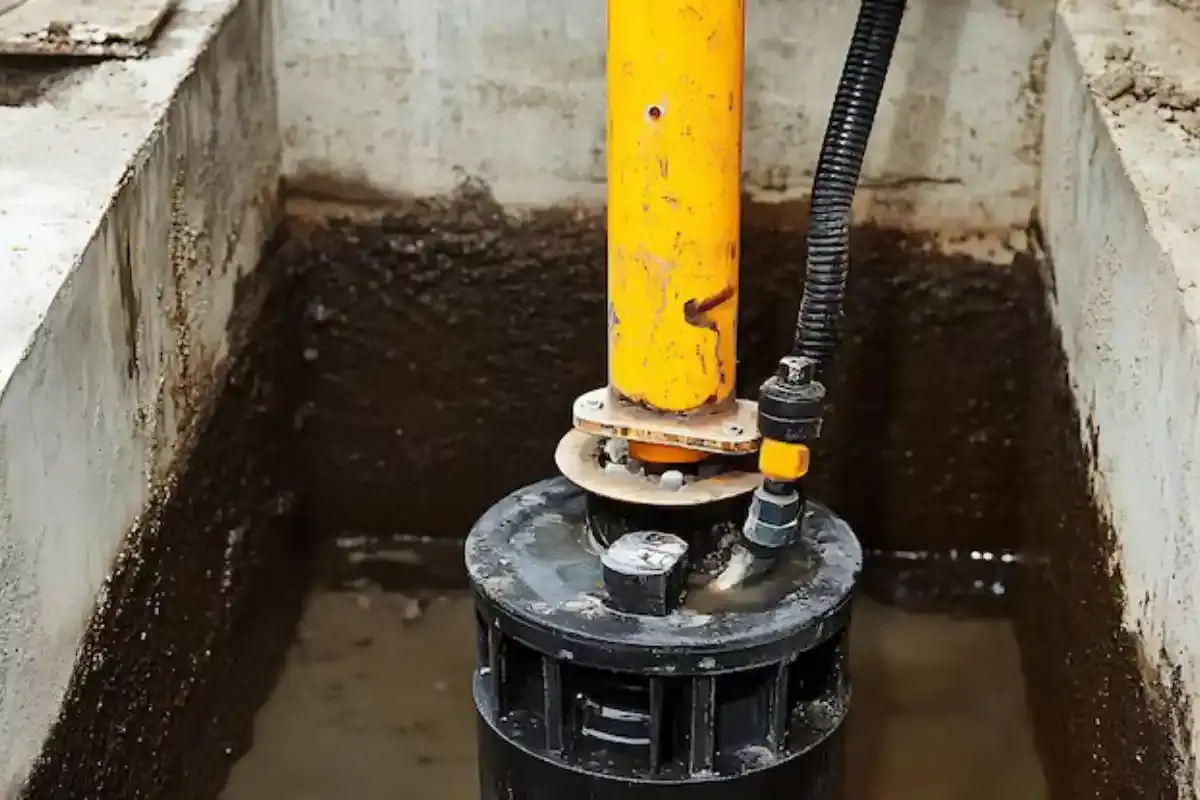
A water-powered sump pump uses the pressure of your public water supply to push water out of the sump pit. It has no motor and needs no electricity, so it keeps working in a power outage. It is meant as a backup to an electric primary pump, not a replacement.
That makes it appealing in a storm, and it also uses a lot of water while it runs. Before you install one, check whether it suits your supply, your discharge and your local rules.
How it works
The unit is a venturi pump. Pressurized water flows through a small nozzle and creates suction that draws water from the sump pit and sends both streams out the discharge pipe. A float switch turns the water on when the pit fills.
Because it relies on supply pressure, it needs adequate pressure at the connection. Low pressure reduces its pumping power. It also needs a good backflow arrangement so pit water cannot reach your drinking supply, which is a plumbing code issue we handle carefully.
Water-powered backup and battery backup
Both back up a primary pump. They differ in resources.
Water-powered backup
- No battery to maintain
- Runs as long as water pressure lasts
- Uses a significant amount of water, and cannot be used on a well
Battery backup
- Independent of the water supply
- Runs for a limited time per charge
- Needs periodic battery checks and replacement
Limits you should know
These matter more than the sales pitch.
Needs public water
A well home cannot use one, since the pump would drain the well and pressure tank.
Uses a lot of water
Running during a long storm adds to the water bill and may be restricted by the utility.
Pressure dependent
Low pressure at the connection cuts performance.
Backflow risk
Must be installed with proper protection so pit water cannot enter the supply.
Cheshire note: utility, wells and permits
Cheshire's public water comes from the Regional Water Authority. Ask the utility whether water-powered pumps are allowed and what backflow protection it requires, because we do not quote a rule we cannot verify. Homes on private wells, which exist in Cheshire and Prospect, cannot use this kind of pump safely. The Chesprocott Health District answers well questions.
Permit rules vary, and the Cheshire Building Department at 203-271-6640 is the place to ask about plumbing permits for a backup system.
Sources: Regional Water Authority and Chesprocott Health District websites and the Town of Cheshire Building Department.
What a good install includes
A reliable backup follows these steps.
- 1
Primary pump check. Confirm the electric pump, switch and check valve are healthy.
- 2
Backup placement. Install the backup above the primary's float so it only runs when the main fails.
- 3
Backflow protection. Fit the required device between the supply and the pump.
- 4
Discharge. Route water well away from the foundation and away from a septic area.
- 5
Test. Fill the pit and confirm both pumps work.
Is it right for you
If your power goes out in storms and your basement floods when it does, a backup is worth having. A water-powered unit suits a public-water home with decent pressure. A battery system suits a well home, or anyone who wants independence from the supply.
Either way, the primary pump matters most. Our sump pump repair team services both, and basement waterproofing handles chronic water. We serve Prospect and Southington as well. Call (203) 720-6269 to schedule.
When the primary pump fails: the usual causes
The primary pump fails for ordinary reasons: a stuck float, a burned motor, a clogged intake or a failed check valve. Knowing the cause tells you whether a backup would have helped. A power outage is where a backup shines, while a stuck float affects both pumps if they share a pit.
Test the primary pump every season, and clean the pit each year. Remove debris and check the discharge. A backup is only as good as the maintenance behind it, and neglected equipment fails in the exact storm you needed it.
Discharge and drainage placement
Wherever the water goes, it must leave the foundation area. A short discharge that ends near the wall just recirculates, so water returns to the pit. Extend the line well away, and slope the ground so water moves farther, not back to the house.
Never discharge into a septic system or its leach field. And avoid sending pit water to a neighbor's yard or onto a public sidewalk in winter, where it can freeze. If you are unsure where discharge is allowed, ask the town building department.
What a plumber looks at first
When we evaluate a pit, we check the primary pump age and condition, the float switch, the check valve, the discharge route and the electrical supply. Many flooding events are traced to a primary pump that was never tested, not to the lack of a backup.
We also look at the pit itself: its size, whether it has a lid, whether debris gathers and whether the pump sits on a firm base. A tidy pit with a healthy primary pump and a sensible discharge prevents most problems.
Alarms and monitoring
A high-water alarm in the pit gives a warning before water reaches the floor. It is cheap, and it works even when both pumps fail. Some units connect to a phone and send a message.
Check the alarm batteries with the pump test each season. An alarm that is dead when you need it is worse than none, because it gives false comfort.
Permits and code for sump pump discharge
The 2022 Connecticut State Building Code is built on the 2021 International Plumbing Code (IPC). Where a sump pump discharges is regulated, so check with the town before adding a line. If your job might need a permit, call the Cheshire Building Department at 203-271-6640 before work starts.
Testing and upkeep
Test the backup each season by filling the pit with a bucket and watching it run. Check the discharge line for kinks and ice. Replace a failing float switch, since a stuck switch is the most common failure in any sump system.
Keep the pit clear of debris, and keep a written note of the install date and model so a plumber can find parts later.
Questions about this topic in Cheshire
No. It would drain the well and pressure tank.
Ask the Regional Water Authority and the Cheshire Building Department at 203-271-6640, since rules and backflow requirements apply.
A lot while it runs. Check the manufacturer's specifications.
No. It is meant as a backup to an electric primary pump.
It is independent of the supply and good for wells. It needs battery care.