
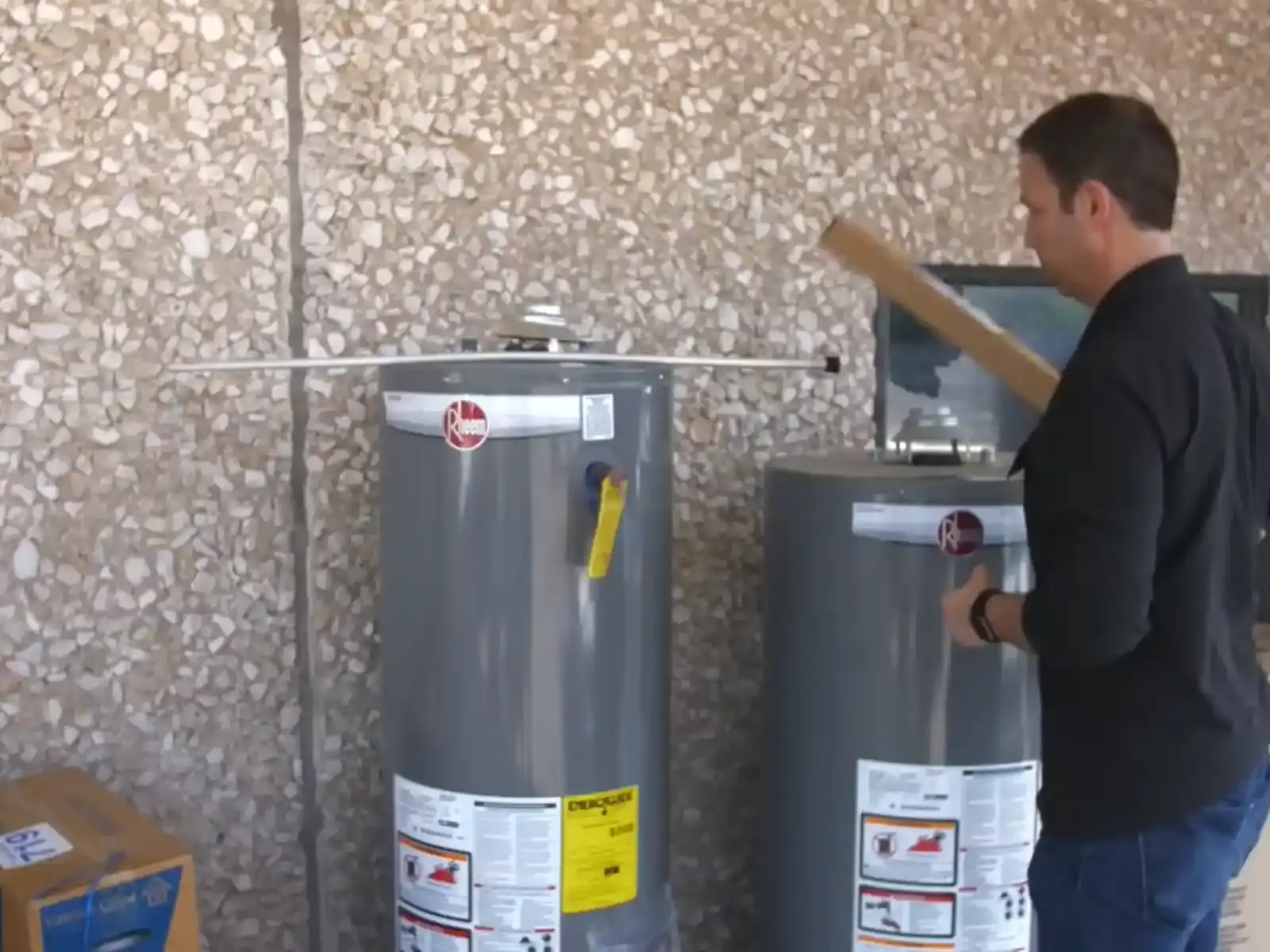
A hybrid water heater, also called a heat pump water heater, pulls heat from the surrounding air and moves it into the water. When demand is high, it can switch to electric resistance elements for extra output. That is why it is called a hybrid, and why it uses much less electricity than a standard electric tank.
The tradeoff is space, airflow and a condensate drain. Before you commit to one, check the room where it will live. This guide covers what a Cheshire homeowner should measure and ask before a plumber arrives.
How a hybrid unit works in plain terms
A fan draws room air across a coil. The coil carries a refrigerant that absorbs heat from that air, and a compressor raises the temperature so it can warm the water in the tank. A side effect is that the unit cools and dries the air around it, which is welcome in a damp basement and less so in a small, cold closet.
Hybrid units are taller and wider than many standard tanks, and they make some fan noise. Most models want a minimum room volume or ducting for airflow, and the manual states the clearance. Measure ceiling height first, because a tall tank on a low basement ceiling is a common stumbling block.
What to check before the install
These four points decide whether a hybrid fits your house.
- 1
Room size and airflow. The manual lists the minimum open volume. A tight closet needs ducting or a different model.
- 2
Ceiling height. Hybrid units run taller than a standard tank, and clearance for service matters.
- 3
Electrical capacity. The unit needs a dedicated circuit of the size the manual specifies. Your panel must have room.
- 4
Condensate drain. The coil produces water. It needs a drain, a floor drain or a small pump.
Hybrid compared with a standard electric tank
Both fit a house without gas. They differ in cost and running cost.
Standard electric tank
- Lower purchase price
- Smaller footprint
- Higher electricity use
Hybrid heat pump tank
- Uses much less electricity for the same hot water
- Needs space, airflow and a drain
- Cools and dehumidifies the room around it
Questions a plumber will ask
Having these answers speeds up the quote.
| Question | Why it matters |
|---|---|
| What size is the current heater? | Sets the baseline capacity. |
| Where is the existing drain or floor drain? | Hybrid units need a condensate path. |
| What is on the electrical panel? | Confirms there is space for a dedicated circuit. |
| Is the room finished or unfinished? | Cold rooms reduce heat pump efficiency. |
| How many people use hot water at once? | Affects tank size. |
Cheshire note: permits and water quality
The Cheshire Building Department at 84 South Main Street issues plumbing permits through the Building Official, and many projects also need electrical or mechanical permits. Permit rules vary, so ask at 203-271-6640. A licensed plumber and electrician can pull the permits that apply.
Water quality affects any tank. Cheshire's public water comes from the Regional Water Authority, whose annual report we do not use for a hardness number because it lists none for the town. Test your tap, and flush the tank and check the anode rod on a schedule.
Sources: Town of Cheshire Building Department page and Regional Water Authority annual water quality report.
Efficiency and the Connecticut winter
A hybrid heater works best in a space that stays above freezing and does not drop very cold. A heated basement is ideal, and an unheated garage in January is a poor fit. In cold rooms the unit may fall back to its electric elements, which reduces the savings.
Many models let you pick a mode, from heat pump only to electric only, so you can balance savings and recovery time. Ask which mode suits your household and how to switch on a busy morning.
Noise, placement and comfort
A heat pump water heater makes a steady fan sound, often compared to a window air conditioner running in the next room. In a basement or a utility room that is rarely a problem, and in a closet next to a bedroom it can be. Ask to hear one running before you buy, and think about where the sound travels.
Placement also changes comfort. The unit cools the air around it, which is a nice side effect in a hot basement and a disadvantage in a cold space. If the room is chilly, the cold air can raise heating loads elsewhere. A plumber can suggest a location that balances those effects.
Running modes and recovery time
Most hybrid models offer modes, from efficiency mode that uses the heat pump only to a hybrid mode that adds elements when demand is high, and an electric mode. Efficiency mode saves the most and recovers slowest. A large family with back-to-back showers may prefer hybrid mode.
Ask for the first hour rating, which tells you how much hot water the unit can deliver from a cold start in an hour. Compare it with your peak morning use. If the number is close, consider a larger tank, because running out of hot water in the middle of a shower is the most common complaint about any heater.
Cost, payback and rebates
Hybrid units cost more up front than a standard electric tank, and they use less electricity, so the difference shrinks over the years. How fast depends on your electric rate and hot water use, and we do not promise a number.
Utilities and programs sometimes offer rebates on heat pump water heaters. Ask your electric provider what is available, and read the terms. We can supply the model and installation details that a rebate form asks for.
Getting the install done
We install hybrid and conventional heaters across Cheshire. If your tank has failed, water heater replacement may lead to a like-for-like swap, and a hybrid upgrade can follow when you have time. For planned jobs, water heater installation covers the walk-through and the options.
We also serve Wallingford and Southington. Call (203) 720-6269 to schedule a visit, and bring the model number of your current heater.
Questions about this topic in Cheshire
Usually, if the room has enough open space and stays above freezing. Check the manual's room volume requirement.
Yes. It produces condensate, which needs to go to a drain or a small pump.
Permit rules vary. Ask the Cheshire Building Department at 203-271-6640.
It has a fan and compressor, so you will hear it. It is often compared to a dehumidifier.
No. It needs electricity like any electric heater.