
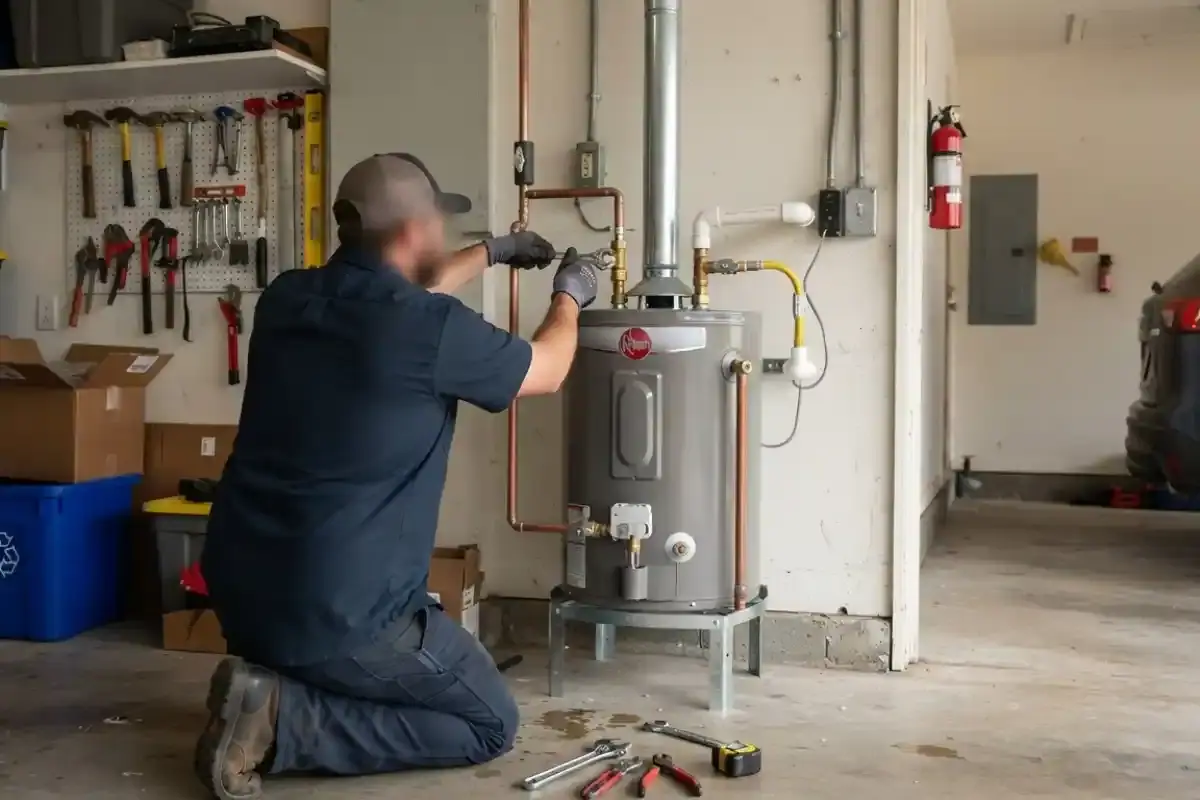
A gas water heater burns fuel and must send the exhaust outdoors. The vent does that job. Getting it right matters for safety, because combustion gases include carbon monoxide.
This guide covers the main vent types, what a plumber checks during an install and what homeowners should watch for. It does not replace the manufacturer's instructions or local code, which a licensed plumber follows.
The main vent types
Atmospheric vent water heaters use a draft hood and a metal vent pipe that rises to a chimney or a roof. Power vent heaters use a fan and plastic vent pipe that can exit through a side wall. Direct vent heaters use a sealed pipe pair that brings combustion air in and sends exhaust out. Condensing high-efficiency models use plastic vent pipe and need a condensate drain.
Each type has its own pipe material, length and slope rules. The manufacturer's installation manual gives the limits, and a plumber follows them.
Vent types at a glance
How they compare.
| Type | How it vents | Notes |
|---|---|---|
| Atmospheric | Natural draft to a chimney or roof | Needs a good draft and combustion air |
| Power vent | Fan pushes exhaust out a wall or roof | Needs electricity and a vent route |
| Direct vent | Sealed intake and exhaust pipes | Works in tight spaces with sealed combustion |
| Condensing | Plastic vent with a condensate drain | Higher efficiency, needs a drain path |
Warning signs of a vent problem
Take any of these seriously.
Soot or scorch marks near the heater
Combustion gases are escaping into the room.
A pilot that keeps going out
Draft problems or a blocked vent can cause this.
Moisture or rust at the vent joints
Condensation in the flue indicates a venting issue.
A carbon monoxide alarm sounds
Leave the house and call 911. Do not reset and ignore it.
Cheshire note: gas, permits and who to call
If you smell gas, leave the building and call 911 or Yankee Gas at 877-944-5325 before you call a plumber. For permits, the Cheshire Building Department at 84 South Main Street issues plumbing and mechanical permits through its Building Official, and permit rules vary by job. Ask the department at 203-271-6640 whether your water heater work needs a permit.
Install and vent rules come from the manufacturer's manual and the applicable code. We do not quote code sections here, so ask the Building Department what applies in Cheshire.
Sources: Town of Cheshire Building Department page and the gas utility emergency line.
What a plumber checks during an install
We check the vent size and material against the manual, the slope and support of the vent pipe, the clearances from combustible material and the combustion air supply. On a replacement, we also look at the old vent for corrosion or blockage, since a vent that served the old heater may not suit the new one.
After the install we test for proper draft or fan operation, check for leaks at the joints and confirm the gas connection holds pressure. Our water heater installation team handles planned swaps, and water heater replacement covers emergencies.
Combustion air: the other half of the vent
A gas heater needs air to burn, as well as a path for exhaust. In a small closet or a tight basement room, the air supply can run short, and the flame draws exhaust back into the room. Louvered doors, vents to outside or sealed combustion models solve that.
A heater in a room with a clothes dryer, an exhaust fan or a fireplace can face competing airflow, which can pull exhaust backward. A plumber checks the room, watches the draft with the other appliances running and tells you if the setup needs changes.
Carbon monoxide detectors and annual checks
Install carbon monoxide alarms near sleeping areas and on every level, test them monthly and replace them as the maker advises. An alarm is a backup, and it does not substitute for a safe vent, though it can save lives when something fails.
Have the heater, the vent and the connections inspected as part of annual maintenance. Look at the vent joints for rust and the draft hood for soot. If you ever see scorch marks, rust streaks or a loose pipe, call a plumber. Do not wait for winter, when closed windows make problems more dangerous.
Replacing a vent when the heater changes
A new heater often needs a new vent, even when the old one looks fine. A modern high-efficiency heater may need plastic vent pipe, while an older atmospheric heater used metal. Swapping to a different model can change the vent diameter, length and routing.
Reusing an old vent that does not match is a common cause of poor draft. We check what the new heater requires, measure the run and replace what must be replaced. That approach avoids a repeat visit after the first cold night shows a problem.
Questions to ask before an install
Ask the installer which vent type the new heater uses and whether the existing vent can be reused. Ask how combustion air will be supplied, how the vent is supported and how it is tested after installation. Ask whether a permit is being pulled and who is responsible for it.
A clear answer to each question tells you the installer has thought about the job. Vague answers are a reason to keep looking. A heater is not an appliance to guess about, and a short list of questions protects your household.
Code and permits for water heater venting
Connecticut plumbing work falls under the 2022 State Building Code, which adopts the 2021 International Plumbing Code (IPC). Venting is where the plumbing and fuel gas rules meet, which is why it is not a place for guesses. Permit questions go to the Cheshire Building Department at 203-271-6640, since the Building Official issues plumbing permits in town.
Why DIY venting is a poor idea
Vent mistakes are not visible until they hurt someone. A joint that is slightly loose, a slope that is wrong or an undersized vent can all push exhaust into the house. A carbon monoxide detector near sleeping areas is a necessary backup, and a plumber's test confirms the system works.
If you want to change fuel types, a tankless water heater has different vent needs, and a heat pump unit avoids a flue altogether. We serve Prospect and Meriden as well, and a call to (203) 720-6269 starts the conversation.
Questions about this topic in Cheshire
Power vent and direct vent models can, within the manual's limits. Atmospheric models generally go up to a chimney or roof.
Permit rules vary. Ask the Cheshire Building Department at 203-271-6640.
Leave the house and call 911. Do not reset it and stay inside.
Only if it is sound and suits the new unit. A plumber inspects it.
Leave the building and call 911 or Yankee Gas at 877-944-5325 first.