
Bleach does not clear most clogs. It is a disinfectant and a bleaching agent, and the stuff that clogs drains, such as hair, grease, soap scum and paper, is not something bleach breaks up. Pouring it down a slow drain mostly wastes bleach and risks harm.
This guide explains what bleach does in a drain, why mixing cleaners is dangerous and which steps do work. It also covers a point that matters in Cheshire, where many homes use septic systems.
What bleach does and does not do
Household bleach kills some germs and removes stains. It will not dissolve a hair clump, cut through a grease plug or open a wad of wipes. At best it deodorizes a drain for a few hours.
Used in large amounts, bleach can corrode some metal drain parts and irritate skin and lungs. It also lingers in the trap, which makes a later plumber's job less pleasant.
Dangers of mixing drain products
Never combine cleaners.
Bleach and ammonia
Together they release toxic chloramine gas.
Bleach and acid cleaners
They can release chlorine gas.
Bleach and chemical drain openers
They can react violently and splash.
Bleach in a backed-up line
The liquid sits in standing water and sprays when someone plunges.
Septic systems and bleach
A septic tank depends on bacteria to break down waste. Large doses of bleach can disturb that biology, which is one reason septic homes should use cleaners sparingly. Small amounts from normal laundry are one thing, and repeated drain flushing with bleach is another.
If you are not sure whether your Cheshire home is on septic or sewer, ask the town or the Chesprocott Health District. The Cheshire Sewer Division reports serving about 5,000 properties, so a large share of homes are not on the public system.
What works better
Start with the least risky method.
- 1
Use a plunger. A sink or tub plunger with a good seal clears many clogs.
- 2
Remove and clean the trap. Place a bucket, unscrew the trap and clear what is inside.
- 3
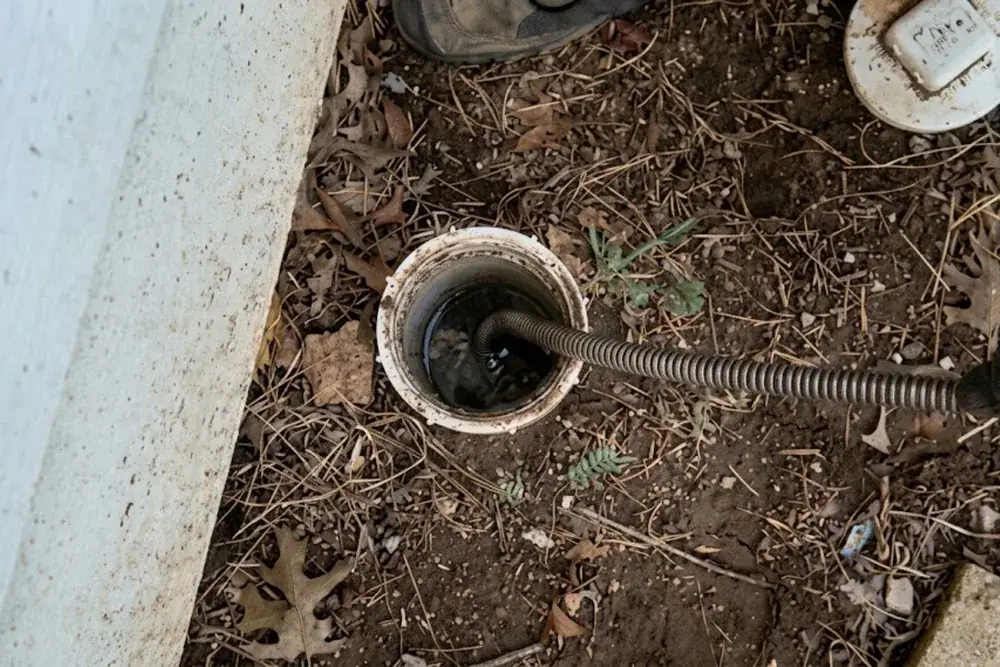
Use a drain snake. A hand auger reaches hair and soap beyond the trap.
- 4
Flush with hot water. Hot, not boiling, water helps soften soap and grease after a snake pass.
- 5
Call a plumber for repeat clogs. A line that clogs again points to buildup or damage.
Cheshire note: sewer, septic and grease
The Cheshire Sewer Division operates about 120 miles of collection piping and ten pump stations, and the town runs a fats, oils and grease program for food service through its Water Pollution Control Division. Homes are not part of that program, but the same rule helps. Keep grease out of drains, and your pipes and the town system will thank you.
Sources: Town of Cheshire Sewer Division and FOG program pages.
Bleach compared with mechanical clearing
What each does to a typical clog.
Bleach
- Disinfects and deodorizes
- Does not dissolve hair, grease or paper
- Risks chemical reactions and pipe wear
Plunger, trap cleaning and snake
- Remove or break up the clog
- No chemical risk
- Work on most household clogs
A better routine for kitchens
Kitchen drains clog because fat, starch and food bits build up. Scrape plates into the trash, wipe greasy pans with a paper towel and run hot water for a few seconds after washing. Once a month, pour hot water with a little dish soap down the drain to carry away light film.
If your kitchen has a disposal, feed it small amounts and run cold water while it works. Avoid pouring oil down the drain even when it is hot, since it cools further down the pipe and coats the walls.
Bathrooms: hair is the culprit
Bathroom drains clog with hair bound in soap. A hair catcher in the tub costs very little and prevents most clogs. Every few weeks, pull the stopper, lift out the hair and rinse it. That single habit prevents far more clogs than any liquid cleaner.
For a slow sink, remove the pop-up stopper and clean the pivot rod and the area under it. Many sink clogs sit within a few inches of the drain opening, and a bent wire or a plastic drain tool reaches them without chemicals.
Floor drains and basement drains
Basement floor drains hold a trap of water to block sewer gas, and that water evaporates in dry months. A dry trap lets gas rise, and a smell appears. Pouring a pitcher of water, followed by a spoonful of cooking oil to slow evaporation, restores it. You do not need bleach.
If a floor drain gurgles or backs up, that points to the main line, not a local clog. Stop using water and call a plumber. Pouring chemicals into a floor drain that is backing up from the main only adds a hazard to the water that rises.
Cleaning the trap safely
Place a bucket under the trap, loosen the slip nuts by hand or with pliers and drop the trap into the bucket. Clear the gunk, rinse and reassemble with the washers seated. Run water and check for drips at each joint.
Wear gloves, and do not pour the contents down another drain. This simple job clears a large share of sink clogs without a drop of bleach. If the trap is clear and the drain is still slow, the problem is farther down the line.
Permits and code for drain chemicals
The 2022 Connecticut State Building Code is built on the 2021 International Plumbing Code (IPC). Code does not cover what you pour down a drain, but it does cover pipe repairs that follow a bad clog. If your job might need a permit, call the Cheshire Building Department at 203-271-6640 before work starts.
When to call a plumber
If a clog returns within weeks, or if several fixtures are slow at once, the cause is deeper than the trap. Our drain cleaning team clears branch and main lines, and a sewer camera inspection shows why they keep clogging.
We serve Cheshire and Meriden and Wallingford nearby. Call (203) 720-6269 any time, and tell us what you have already poured down the drain so the plumber can work safely.
Questions about this topic in Cheshire
Rarely. It disinfects and does not dissolve most clogs.
Small amounts from laundry are different from repeated drain dosing. Large amounts can disturb septic bacteria.
No. Mixing cleaners can release dangerous gases or cause violent reactions.
Ask the Cheshire Sewer Division or the Chesprocott Health District.
Do not add other chemicals. Run water, ventilate and call a plumber if the drain stays slow.